Structural rodent exclusion serves homeowners seeking an architectural barrier rather than repetitive poison bait rotations. Relying strictly on chemical bait stations inside living areas can lead to dead rodents…
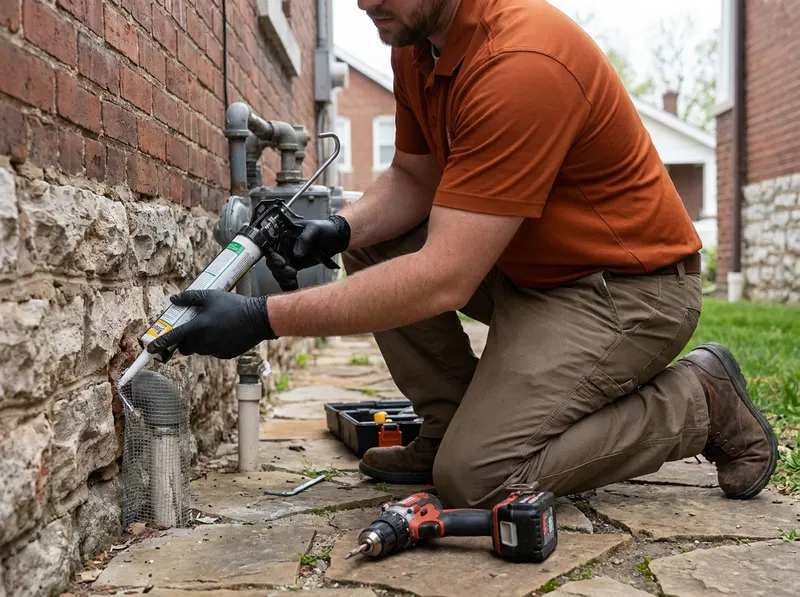
Structural rodent exclusion serves homeowners seeking an architectural barrier rather than repetitive poison bait rotations. Relying strictly on chemical bait stations inside living areas can lead to dead rodents inside wall cavities, causing odor issues and insect attraction. Mechanical exclusion physically denies pests entry by securing crawlspace vents, roof transitions, and utility lines with chew-proof hardware cloth and metal flashing.
Historic masonry across Soulard, Lafayette Square, and Benton Park often features aged lime mortar and porous stone foundations where settling creates subterranean access pathways. In mature neighborhoods such as Tower Grove South, Shaw, and the Central West End, overhanging tree canopies give roof rats direct access to fascia boards, unmeshed attic louvers, and chimney caps. Mississippi Valley winter freezes cause building materials to contract, opening exterior gaps that invite field mice indoors as temperatures drop.
Technicians evaluate every perimeter vulnerability, including garage door sweeps, exterior AC conduit runs, and basement window headers in Dogtown, The Hill, and Lindenwood Park. All identified voids are sealed using corrosion-resistant galvanized steel mesh and non-toxic commercial sealants that withstand rodent gnawing. This methodical process aligns with Integrated Pest Management standards, restoring household peace without dispersing loose poisons around family members or pets.
Every job gets a firm, written price after a free on-site visit.
Tell us about your structural rodent exclusion job in Saint Louis and we'll send a clear, written quote — usually the same day.
 Farnova Pest Management Services